Plaster-based moulds
A plaster-based mould can reproduce detail with a suitable model and alloy. Drying, burnout and preheating take time. Size and shape also influence the choice.
De Gietkamer · Soest · Bespoke metalwork
The mould affects how a design becomes metal. You need not choose plaster, ceramic shell or sand yourself. We assess the model, details, metal and quantity.
Show us your idea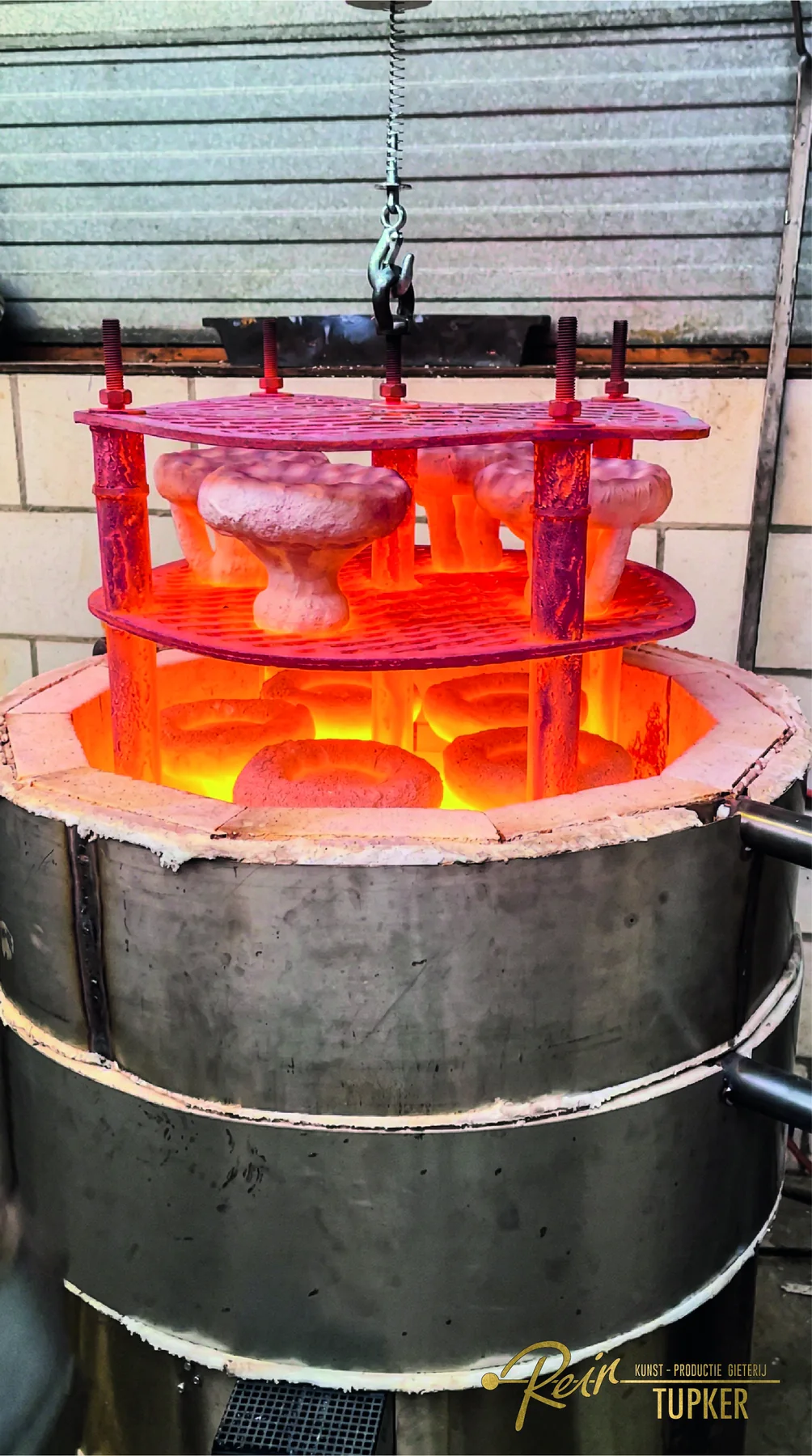
A plaster-based mould can reproduce detail with a suitable model and alloy. Drying, burnout and preheating take time. Size and shape also influence the choice.
Lost-wax casting may use layers of ceramic shell built around a wax model. This can capture fine detail and complex forms. Building and drying the shell take time.
Sand can suit larger, robust parts or repeat work. Parting, release, cavities, surface and machining determine whether it is appropriate. The technical assessment is always project-specific.
De Gietkamer
It depends on shape, size, detail and quantity. Plaster, ceramic shell or sand may each work.
Sometimes, as a model or intermediate step. The print material and casting method determine how it can be used.
Send whatever you already have: a photograph, sketch, drawing, model or file. Dimensions, quantity, intended use and finish help us assess the production route. If anything is missing, we will ask you directly.
Explore other work
Share a photo, sketch, technical drawing or 3D model. We will discuss shape, material and production with you.